
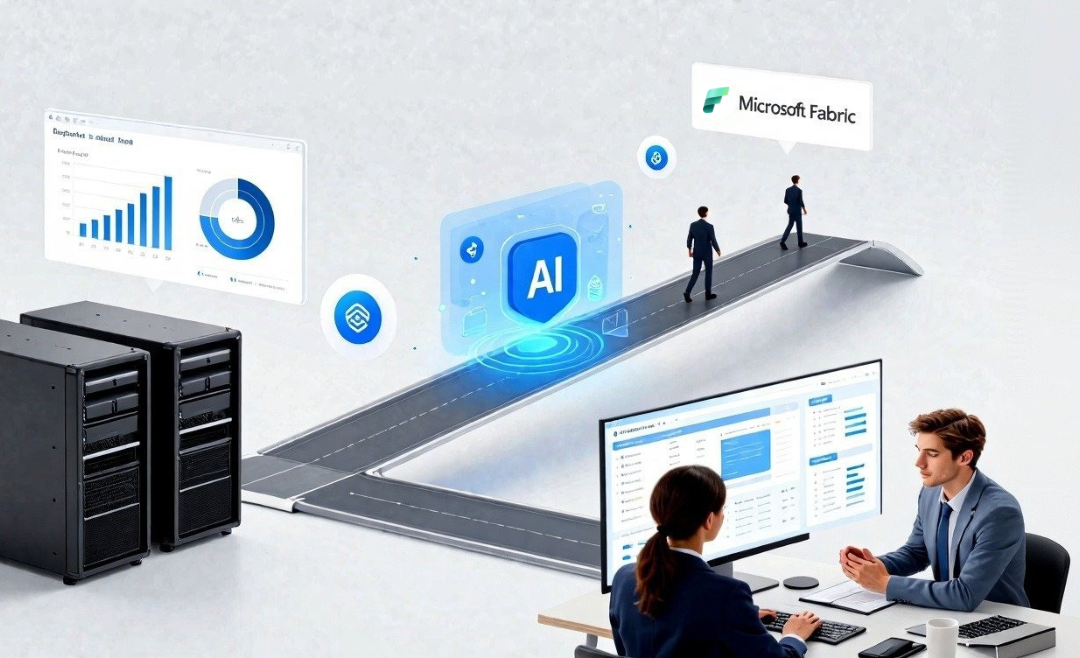
For years, you would have invested in data platforms to store information, build reports, and track performance. And that effort created visibility into sales, costs, and operational performance.
But now the expectation is different. You want visibility and clarity before committing to a decision. In fact, CXOs today want answers in plain language while moving forward with confidence.
This is where the idea of a decision platform starts to make sense.
Microsoft Fabric, together with Copilot, is shaping this shift. With features like Chat with Data, your data no longer sits inside Power BI dashboards waiting to be interpreted by a professional. It becomes something leaders can interact with directly, almost like a conversation with their own business.
“I’m less interested in how sophisticated analytics look. I care about whether my client teams walk out of a meeting knowing what to do next”
– Chief Executive Officer, UBTI
Microsoft is providing a clear direction for organizations to follow. Their vision for Fabric brings analytics, data engineering, and BI into one environment so teams can work cohesively. When Copilot is added to this environment, asking questions in natural (conversational) language becomes part of daily decision-making.
The Shift from Data Platforms to Decision Platforms: Microsoft Fabric & Copilot
- A data platform answers: “What data do we have?”
- A decision platform answers: “What should we do next?”
A traditional data platform focuses on storage, pipelines, and reporting. It organizes data neatly and helps teams review performance. However, a decision platform goes one step further. It connects data to real choices, and supports leaders when they want numbers, compare scenarios, or plan actions.
Microsoft Fabric supports this shift by integrating data, analytics, business intelligence, and reporting into a single system. OneLake serves as a unified data foundation, so your teams do not work from separate copies; everyone refers to the same source.
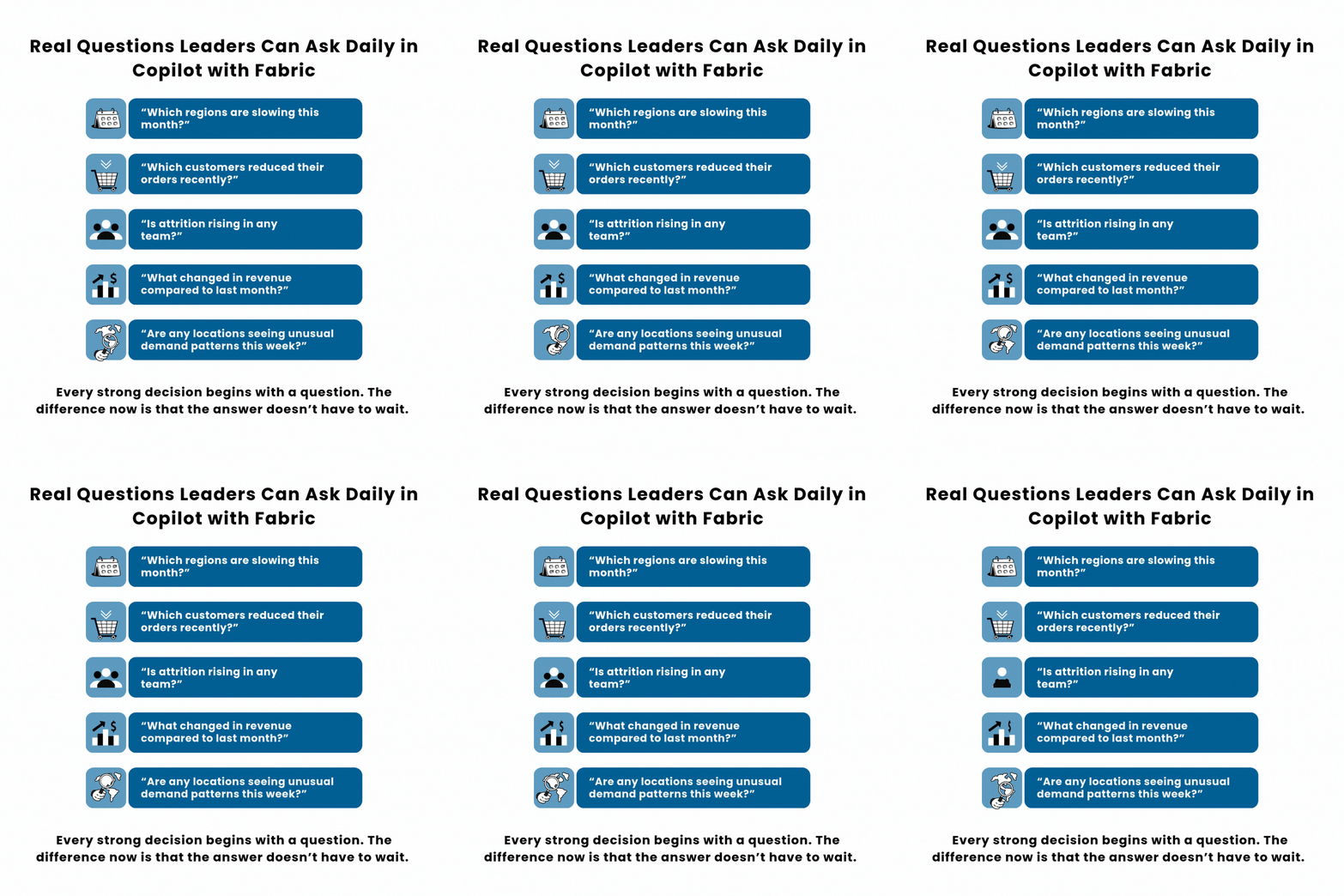
But the best part is Copilot. With this layer, instead of waiting for analysts to prepare views, you can Chat with Data and explore answers all by yourself:
- A sales head can ask about regional trends;
- An HR leader can ask how attrition and hiring are shifting across teams;
- A finance leader can ask about recent cost patterns;
- An operations head can ask which products are missing their daily targets and why.
For any of these scenarios, the AI will give natural language summaries based on available data.
In 2026, Traditional Analytics Still Has Certain Limits
Dashboards and KPIs remain valuable, and traditional data analytics platforms provide a foundational structure. However, metrics alone rarely provide complete clarity. When leaders see a number on a dashboard, they often need validation of the data, context against prevailing industry trends, and guidance on what actions to take next. It is at this stage that conventional tools begin to fall short.
Static reports cannot always keep pace with the modern executive-level style of thinking. They can only show what someone designed earlier. In fact, they cannot answer a sudden “why” or “what if” in the middle of a discussion.

This is where conversational analytics adds value. When you can bring natural language interaction with data, you’ll look beyond predefined views. You can literally ask, refine, and explore various business scenarios in real time. Copilot in Microsoft Fabric satisfies this purpose through queries, summaries, and guided insights.
“Better decisions come from better questions. And the right platform simply makes those questions easier to ask.” – Managing Director, UBTI
Ultimately, the goal here is not to produce more reports, but to make decisions clearly.
How Microsoft Fabric + Copilot Changes the Decision Lifecycle
A business decision lifecycle, typically, includes:
- Gathering data
- Preparing reports
- Reviewing insights
- Deciding next steps
Microsoft Fabric and Copilot shorten this cycle by unifying data, so teams spend less time reconciling numbers. For instance, one of your board members reviewing quarterly performance might suddenly ask: “Which region improved profit margin the most?” or “What changed compared to last quarter?”
For these queries, you can continue the discussion by interacting with the data directly in Copilot, without switching between reports or platforms. This creates a more organic decision flow.
“We’ve seen clients invest heavily in advanced data analytics platforms but still rely on gut calls. The turning point comes when data enters daily conversations, and not just during a monthly review meeting.”
– Director of Technologies, UBTI
A Real-World Example in Retail
UBTI worked with a fresh produce supply chain brand handling last-mile deliveries.
If a truck took a slower route to deliver products, they noticed later. If the inventory data was mismatched, it showed up in the next-day report. If something unusual happened during peak hours, they often reacted when the impact was already visible in delivery timelines or revenue.
Once we moved their operational data into Microsoft Fabric with near-real-time ingestion, the tone of daily work changed. Live dashboards started reflecting vehicles, orders, and stock positions as events happened. Route issues were caught while drivers were still on the road. Stockouts were noticed early enough to reroute supplies.
Next, we layered Copilot’s Chat with Data capabilities on top of that. Instead of waiting for analysts, the managers can now simply ask, “Which routes are delayed right now?” or “Show me terminals with unusual activity today.” That small change influences how the day unfolds.
“One standard feedback we keep hearing from clients is Copilot shortens the time between a question and a decision. And I’m really encouraged when I see CXOs act on those answers.” ” –Director of Operations, UBTI
Next steps for Microsoft Fabric and Copilot
In the next three to five years, we firmly believe that organizations moving from data platforms to decision platforms will spot risks and opportunities earlier. They will be able to:
- Adjust plans mid-cycle instead of post-review.
- Base strategic choices on live operational signals rather than retrospective reports.
- Detect performance drops or demand spikes on the spot.
Here’s a question to leave you thinking: If your teams can ask their data-related questions in plain, natural language and get answers within seconds, how would that change the speed of your weekly decisions?

Today, CXOs may still open Power BI reports to quickly check the health of their business. They click through pages, apply filters, and then try to interpret the data. Tomorrow, leaders will habitually Chat with Data. So, if you can make data interaction as simple as asking one of your colleagues a doubt, you can make decisions while there is time to change the outcome. That shift will have a big impact.
The enterprises that win in the upcoming years will be those that treat data not as a technical resource, but as an interactive strategic asset: something to ask, test ideas, and to make calls with confidence.
“Technology is rarely the hard part. The bigger shift happens when business users start asking their own questions instead of waiting for analysts.” – Head of Practice for Cloud Data Warehouse and Microsoft Fabric, UBTI
Turn your data platform into a decision platform. Speak with our team for a focused assessment or a hands-on Microsoft Fabric and Copilot rollout.
Frequently Asked Questions
1. Do we still need dashboards if we use Copilot in Microsoft Fabric?
Yes, dashboards still matter. They give standard KPIs and a shared view for everyone. But dashboards answer planned questions, not spontaneous ones. Copilot helps when a leader asks something that wasn’t built into a report. The two work best together, not as replacements for each other.
2. Is Copilot in Microsoft Fabric only useful for large enterprises?
Large enterprises benefit strongly because their data is spread across many systems. But even mid-sized and growing firms face delays when data sits in silos. If your leaders wait days for answers, the value is clear. Size matters less than decision speed.
3. Where exactly are we losing time today: in data preparation, reporting, or interpretation?
Most organizations lose time in all three stages. Microsoft Fabric consolidates storage, ingestion, and pipelines, while Copilot reduces the interpretation lag. The result is measurable time savings in meetings, strategy sessions, and operational responses.
4. Will Copilot replace data analysts?
No. In fact, data analysts become more valuable. They spend less time building business reports and more time on deeper analysis. They also prepare governed data that Copilot relies on. Their role will shift toward quality, context, and advanced insights.
5. Is Microsoft Fabric and Copilot together safe for sensitive industries?
Yes, if data governance is set correctly. Microsoft Fabric supports role-based access and data controls. Users only see what they are allowed to see. Sensitive data still adheres to your compliance rules, making it suitable for sensitive industries such as healthcare, finance, energy, and telecommunications.