Our client has evolved into a leading non-governmental organization, extending its reach to remote rural villages of Nairobi. With a devoted team of over 1700 Kenyan staff members, a global network of partners and leaders, and the unwavering support of missionaries, the organization has become a beacon of hope for countless children and families.
The Client
Our client has evolved into a leading non-governmental organization, extending its reach to remote rural villages of Nairobi. With a devoted team of over 1700 Kenyan staff members, a global network of partners and leaders, and the unwavering support of missionaries, the organization has become a beacon of hope for countless children and families.
Challenges Faced by the Client
The organization faced several challenges:
- Designation-Based Leave Management: The institution struggled to gain insights into different leave patterns based on employee designations (teaching vs. non-teaching), resulting in a lack of clarity regarding inconsistencies in leave trends.
- Monthly Leave Tracking: There was a lack of clarity regarding the average leave count per employee, making it difficult to monitor usage and trends effectively.
- Leave Allocation and Staff Count: The organization required a dashboard to identify leave usage trends and gaps based on the number of staff in each category, which had not been established.
- Approval Process: The existing system did not effectively track approved versus unapproved leaves, resulting in confusion regarding leave counts and percentages.
- Upcoming Leave Visibility: The absence of mechanisms to provide visibility into upcoming leaves created difficulties in anticipating potential gaps in resource availability.
- Dashboard Requirements: A comprehensive dashboard was required to generate insights based on projects and departments, emphasizing the top five centers with significant leave-related challenges.
- Gender Demographics: Understanding the distribution of male and female staff concerning leave usage was also a challenge that needed addressing.
Solutions
To address these challenges, the organization implemented a Power BI dashboard specifically designed for employee leave management. The key features of this solution included:
- Designation-Based Leave Tracking: The dashboard categorizes leave by designation, allowing for tailored management strategies for teaching and non-teaching staff.
- Monthly Leave Analysis: It provides analytics on average monthly leave counts per employee, enabling better forecasting and planning.
- Leave Allocation System: A structured approach to allocate different types of leaves based on staff count in various categories was established.
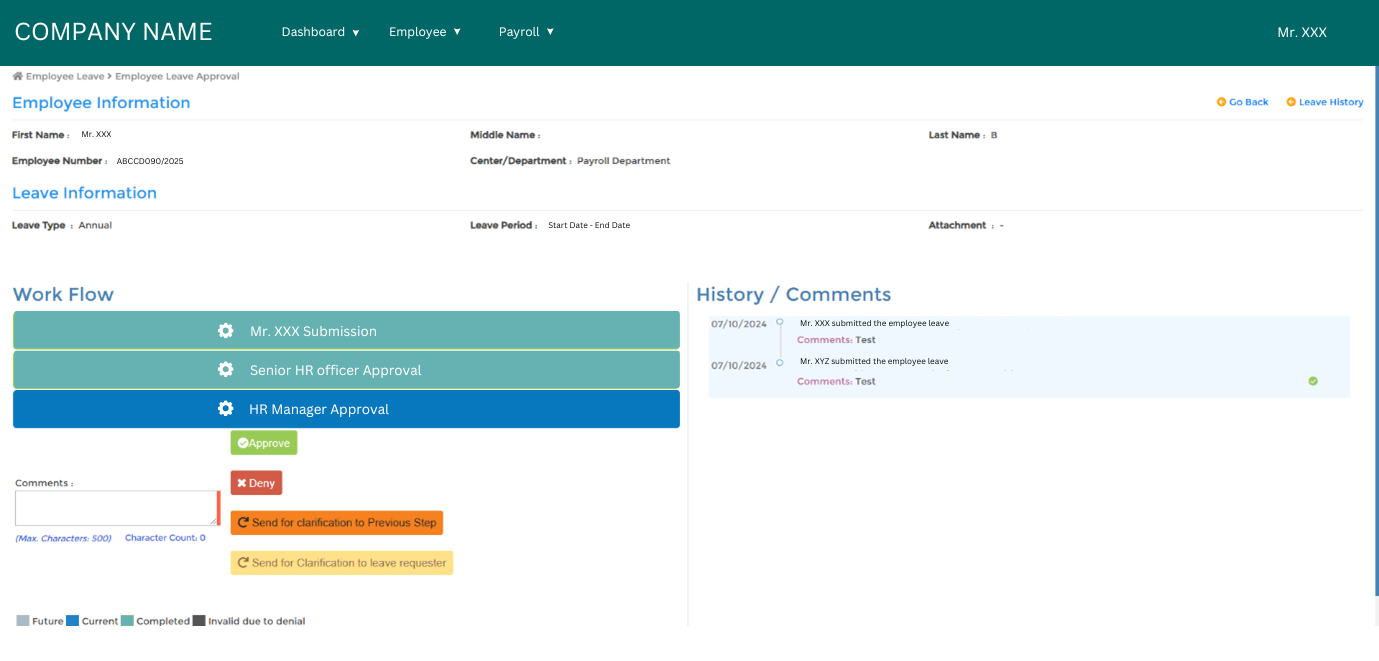
- Approval Workflow Management: The dashboard tracks approved and unapproved leaves, offering real-time data on leave counts and percentages.
- Upcoming Leave Notifications: Alerts for upcoming leaves are integrated into the dashboard to enhance planning capabilities.
- Organizational Dashboard Features:
- Project-based and department-based views were created to analyze leave patterns effectively.
- Identification of the top five centers with the highest leave requests or issues was implemented for targeted interventions.
- Demographic Insights: Gender-based analytics were included to assess differences in leave usage between male and female staff.
Solutions Benefits
The implementation of the Power BI dashboard yielded several benefits:
- Improved Efficiency: Streamlined processes reduced administrative workload related to leave management, allowing HR personnel to focus on strategic initiatives.
- Enhanced Compliance: By clearly tracking different types of leaves and maintaining records of approvals, the organization ensured compliance with labor laws and internal policies.
- Data-Driven Decision Making: Access to real-time data allowed management to make informed decisions regarding staffing and resource allocation based on anticipated absences.
- Increased Transparency: Employees gained clarity regarding their leave entitlements and usage, fostering a culture of accountability within the organization.
- Proactive Management: Upcoming leave notifications enabled managers to anticipate staffing shortages, facilitating better planning for projects and departmental needs.