The client is an asset management firm with more than $12 billion in assets under management. The firm operates an Order Management System (OMS) alongside an in-house application that supports its business processes, and it requires reliable testing for regular application releases.
Caption
A case study on how UBTI helped an asset management firm improve release quality and accelerate OMS and application testing through manual and automated testing.
Client
The client is an asset management firm with more than $12 billion in assets under management. The firm operates an Order Management System (OMS) alongside an in-house application that supports its business processes, and it requires reliable testing for regular application releases.
Challenges Faced by the Client
The client wanted to modernize its analytics interface through React dashboard development, but faced several challenges:
- Limited React JS expertise: The firm needed experienced React JS professionals, but finding specialists with expertise in emerging technology was challenging.
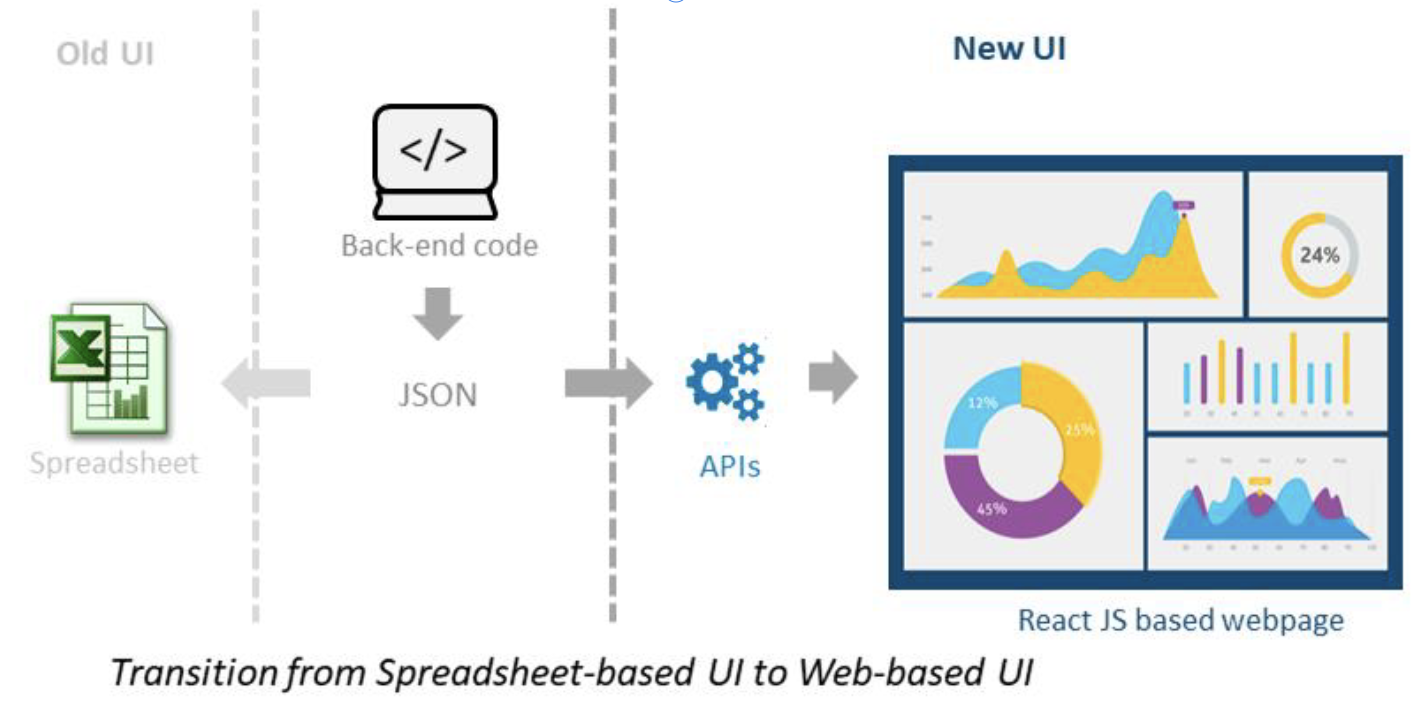
- Front-end development requirement: The client already had a well-established back-end system based on Python and JSON data and needed a partner who could focus specifically on the front-end.
- Flexible technology support: Finding a vendor willing to work specifically on the React JS front-end while integrating with the existing back-end architecture was difficult.
- Improved data consumption: The spreadsheet-based interface created challenges in distributing and consuming analytics data, creating a need for a more accessible web-based experience.
Solutions
With more than 20 years of experience serving the asset management industry, UBTI was selected to independently test new releases of the client’s OMS and in-house application:
- React Dashboard Development: UBTI provided React JS expertise to develop the front-end while allowing the client to retain its existing Python and JSON-based back-end. This approach enabled the firm to move away from its spreadsheet-based interface without requiring a complete overhaul of the underlying system. The React-based interface was designed to provide users with a more flexible way to access and consume analytics data via the web.
- Faster Requirements Understanding: Our team received training in the client’s existing applications and unique requirements. Following the training sessions, the team prepared and presented a reverse knowledge presentation to confirm its understanding of the business processes and application requirements.
- Manual and Automated Testing: We performed both manual and automated testing for each release of the OMS and integration application. The testing approach helped validate application functionality against the client’s requirements and quality standards. Automation was also introduced for regression testing, reducing the turnaround time for validating repeated test scenarios across releases.
- Structured Test Case Repository: Our experts developed and maintained a repository of more than 3,000 test cases covering the project’s testing requirements. This provided a structured foundation for testing across releases and supported consistent validation as the applications evolved.
Outcome
The engagement helped the client move toward a more flexible web-based analytics experience while improving the efficiency and consistency of application testing;
- Modernized User Experience: Replaced the spreadsheet-based interface with a web-based React solution for easier data consumption.
- 3,000+ Test Cases: Built a comprehensive test case repository to support consistent testing across releases.
- 20+ Successful Releases: Supported more than 20 successful application releases through structured testing.
- Faster Regression Testing: Reduced regression testing turnaround time through automation.
- Flexible Resourcing: Enabled the client to scale testing resources up or down based on project requirements.
- Improved Cost Efficiency: Helped the client achieve time and cost savings through a flexible engagement model.
Conclusion
The client needed to replace its spreadsheet-based analytics interface with a more flexible web-based experience while maintaining an existing Python- and JSON-based backend. UB Technology Innovations, Inc. provided React dashboard development expertise along with structured manual and automated testing to support the modernized solution and its ongoing releases. The engagement helped the client improve data consumption, accelerate regression testing, and maintain consistent application quality across 20+ successful releases.